
How water quality shapes UV-C reactor design
Ultraviolet (UV-C) disinfection is a cornerstone of modern water treatment, offering a chemical-free way to neutralize harmful pathogens. Its effectiveness relies on a balance between water quality, reactor design, and flow dynamics. For engineers and technologists, understanding this relationship is key to designing systems that deliver consistent, reliable disinfection even when water conditions fluctuate.

The balance between transmittance and geometry
At the heart of UV-C reactor design lies UV transmittance (UVT), a measure of how much UV light can penetrate the water. High UVT means light travels farther, reaching more microorganisms. But real-world water is rarely pristine. Suspended solids, dissolved organic matter, and even some metals and salts can absorb UV-C light, forcing designers to compensate with more lamps, longer exposure times, or optimized reactor geometries.

Preventing ‘dead zones’
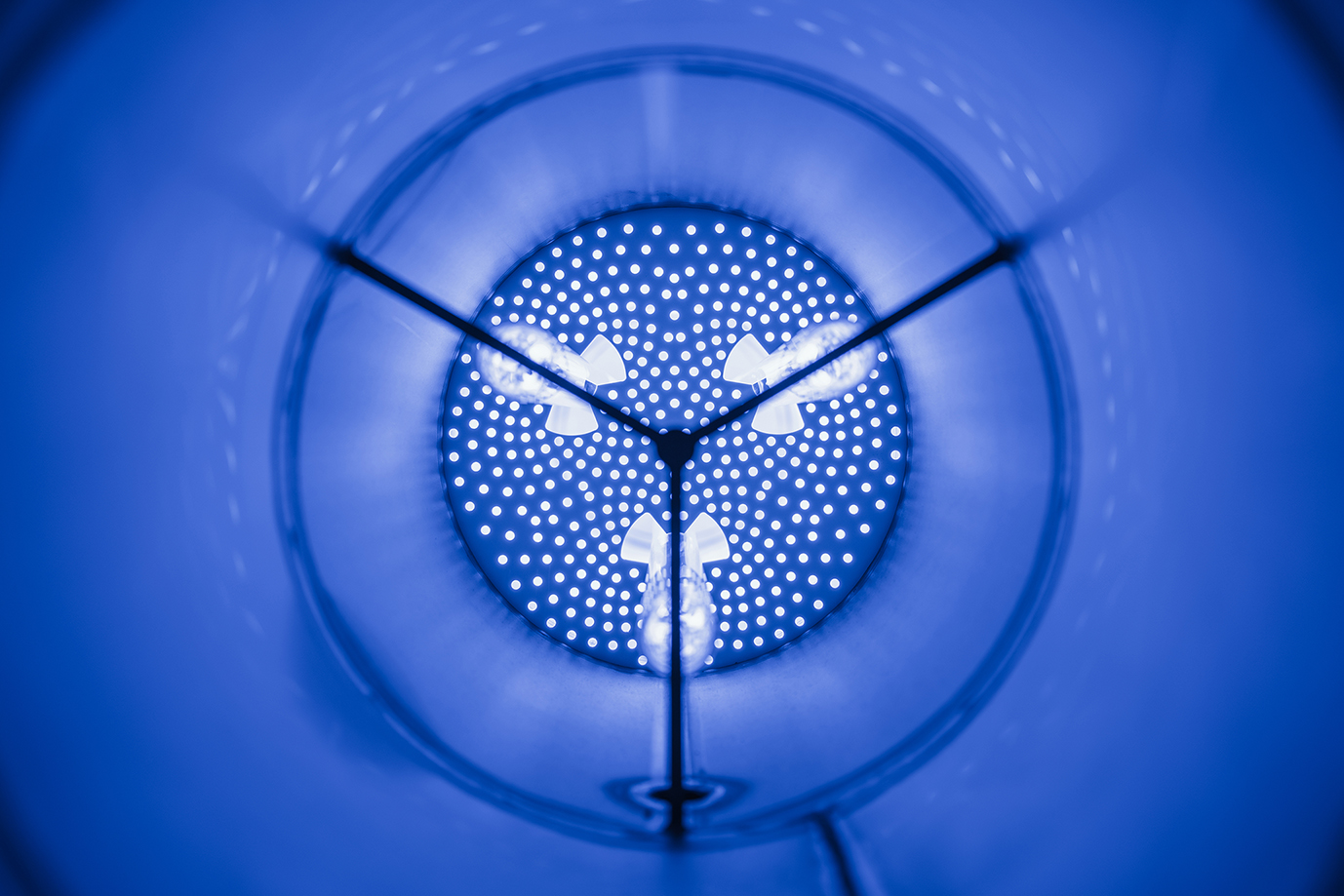
Reactor geometry is one of the most important factors. The shape of the reactor, whether an open channel or closed vessel, dictates how evenly UV light is distributed. Poor geometry creates ‘dead zones’ where pathogens escape treatment unilluminated. While smart designs use baffles, optimized lamp arrays, or even computational fluid dynamics (CFD) modelling to ensure every drop of water gets its dose of UV light. This means that a system designed for high UVT drinking water generally has a much larger vessel with less lamps, because light penetrates much deeper, than a system for low quality process water.
Dose distribution, a make or break factor
Dose distribution is a key factor in making UV-C systems efficient while maximising disinfection effect and process safety. Dose distribution is also the place where theory meets reality. In an ideal world, every microorganism would receive the same lethal UV dose. Often the UV-C dose gets modelled as an average. Mathematically this makes sense. But if you want to reach a Log-4 disinfection, meaning 99,99% of bacteria are killed, the minimum dose is far more important. If only a few drops per liter are left untreated then it does not matter how high the average is. t
That last 1% is not disinfected regardless. In practice, flow rates, lamp power, and reactor shape need to match, and provide a narrow dose distribution to allow safe and efficient disinfection.
Flow rate and distribution
Increase the flow, and water spends less time under the UV lamps. Possibly shifting the dose distribution downward because faster flowing areas are created without sufficient illumination. Too fast, and pathogens slip through the cracks.
Lamp power and placement
More power means higher average doses, but placement matters just as much. A poorly positioned lamp can leave shadows in the reactor, no matter how bright it shines.
In an ideal case all water absorbs the same amount of UV-C light, which means a very narrow dose distribution. Then all light produced is going directly and evenly into the water without under- or over-treating any of it. Every watt used in this case has maximum result. The other example can also be made, if half of your water gets too little UVC light. Increasing lamp power has less effect, while the other half of the water gets too much UV-C and this energy is wasted because you can’t kill a bacterium twice.
“A reactor with high UVT but chaotic hydraulics might still fail if water shortcuts through the system. On the other hand, a reactor with low UVT can compensate with extra lamps or a larger footprint, but only if the flow is managed to avoid bypassing”
Kaspar Groot Kormelinck, R&D Manager, Van Remmen UV Technology
Flow control
Flow control is the silent partner in UV-C disinfection. Uneven flow distribution, caused by poor inlet/outlet design or water level instability, can turn a well-designed reactor into a hit-or-miss operation. Flow control devices like flow plates, baffles, and even real-time sensors help maintain a steady, uniform exposure, ensuring no pathogen gets a free pass.

Designing for the real world
The best UV-C reactors aren’t just powerful, they are adaptable and tailored to their specific application. A good drinking water reactor is different from a wastewater system in many important ways.
Water quality isn’t static; it changes with the seasons, the weather, and even the time of day. Smart designs account for these variations, with redundancy and standby equipment to handle peak flows or equipment failures. Real-time monitoring of UV transmittance (UVT) and flow rates lets operators tweak system performance or flow on the fly, keeping disinfection on target.
“UVC disinfection is a balancing act.Water quality and UVT are the starting point, reactor geometry and flow control guarantee performance, and dose distribution determines the outcome. Mastering this interplay is what separates a decent reactor from a great one. In the end safety and energy savings are the reward for a user that takes the time to make the right choice.”
Kaspar Groot Kormelinck, R&D Manager, Van Remmen UV Technology
