UVC-LEDs in water treatment
UV-C LED’s emit monochromatic UV-C light at specific wavelenghts. UVC LEDs offer several key advantages, including instant on/off operation, making them ideal for intermittent-use applications.
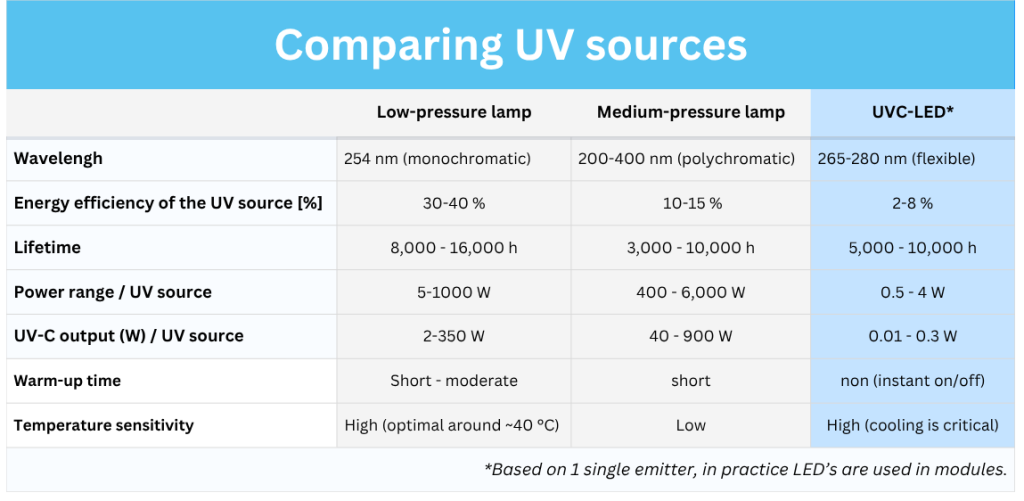
UV-C LED technology is currently particularly suitable for residential applications, low-flow systems and point-of-use water treatment solutions. Unlike conventional low-pressure UV lamps, which emit predominantly at 253.7 nm, commercially available UV-C LEDs typically operate at wavelengths around 260–280 nm. A wavelength around 265 nm is close to the peak of the germicidal absorption spectrum of many microorganisms. However, producing efficient LEDs becomes increasingly challenging at shorter UV-C wavelengths.
Instant on/off capabilities, ideal for intermittent-use applications
Specific wavelengths can be selected to target specific pathogens.
Facilitates compact and flexible low-flow system designs
Challenges of UV-C LEDs
As the newest major UV-C source technology, UV-C LEDs offer significant potential but also face several technical, economic and regulatory challenges. Their suitability therefore strongly depends on the application.
1: Operational costs
For applications requiring continuous operation, current UV-C LED systems are significantly less energy-efficient than low-pressure UV lamps. This results in high operational costs (OpEx).
Commercially available UV-C LEDs typically achieve a wall-plug efficiency of approximately 2–8%, compared with approximately 30–40% for modern low-pressure UV lamps. As a result, considerably more electrical energy is required to generate an equivalent amount of UV-C output.
The instant on/off capability of LEDs can partly offset this disadvantage in intermittent, low-duty-cycle applications such as point-of-use taps, water dispensers and certain household appliances. In continuous municipal, industrial, horticultural or aquaculture applications, however, this operational advantage is not relevant. Therefore, energy performance should always be compared under equivalent operating conditions and for the specific application.
2: Wavelength and germicidal effectiveness
Electrical efficiency alone does not determine disinfection performance. The wavelength of the UV radiation is also important because microorganisms respond differently to different parts of the UV-C spectrum. Low-pressure UV lamps emit predominantly at 253.7 nm. UV-C LEDs used for water treatment typically emit between approximately 260 and 280 nm.
Wavelengths around 265 nm correspond closely to the germicidal action spectrum of many microorganisms. However, producing efficient UV-C LEDs becomes increasingly difficult at shorter wavelengths. LEDs around 270–280 nm therefore currently tend to offer higher electrical efficiency than LEDs operating closer to 265 nm. Even though there is a slight difference in germicidal efficiency from 254nm to 265nm, of approximately 10-20%, this is offset to an overwhelming degree with a >400% difference in electrical efficiency of low-pressure lamps.

3: UV-C LEDs system capacity
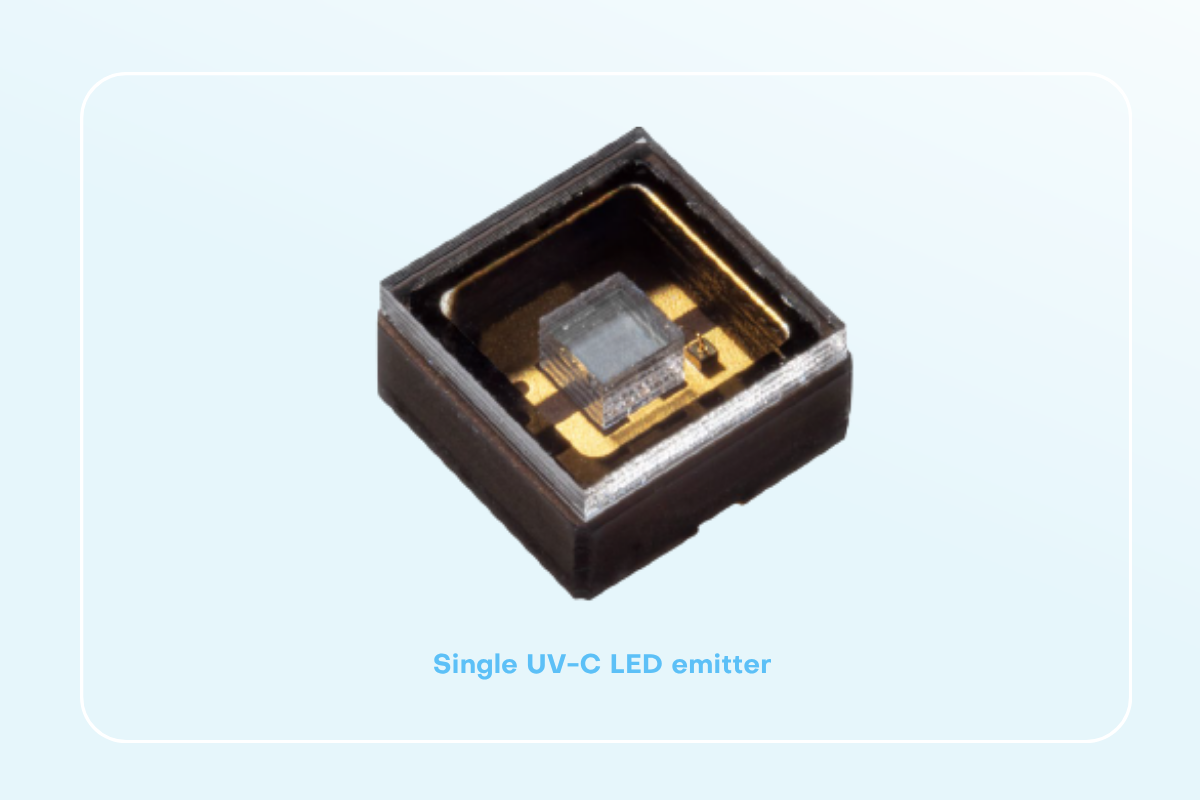
The low optical output power of UV-C LEDs limits system capacity. The optical output of an individual UV-C LED is still relatively low compared with conventional UV lamps. Commercial devices typically produce approximately 0.01–0.4 W of UV output per LED. This is less problematic in small and low-flow systems, where only a limited amount of UV power is required. However, high-capacity applications require substantially greater total UV output. This in part is mitigated by using arrays of large amounts of LED, however purchase and replacement cost of these rises with complexity.
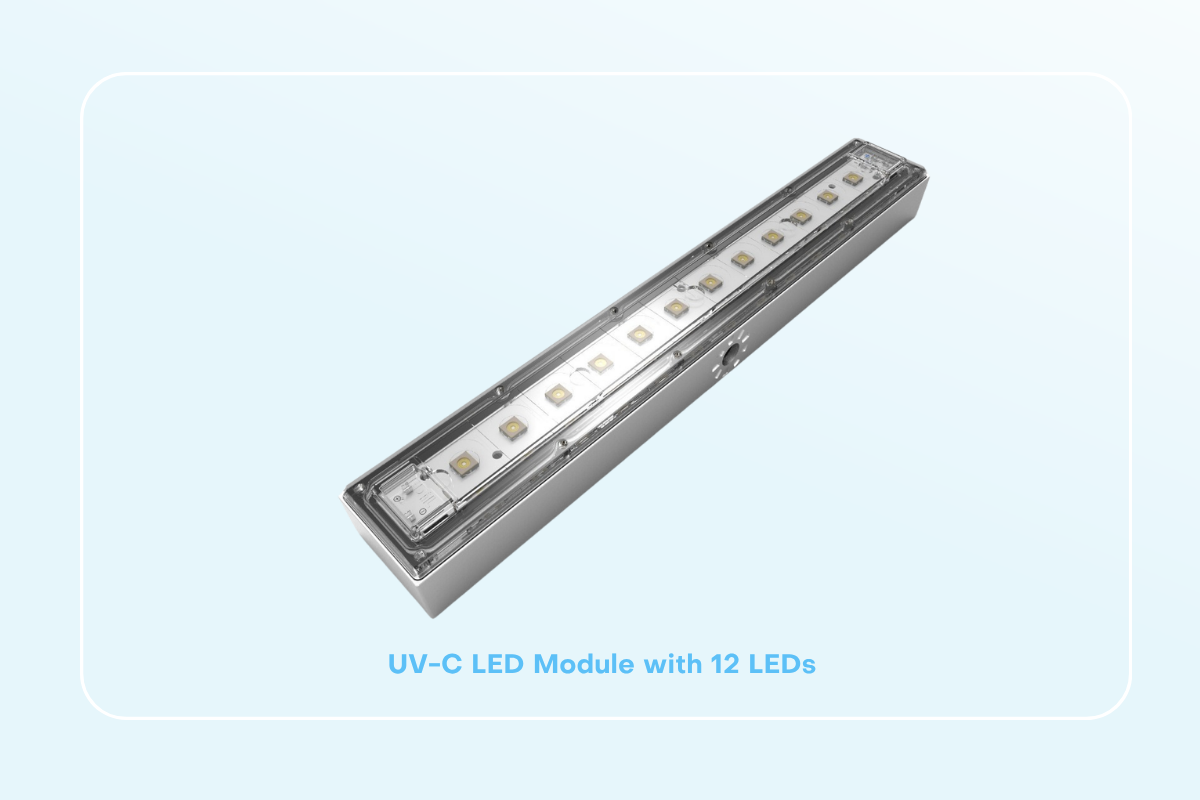
The delivered UV dose depends on both the UV-C intensity and the exposure time: UV dose = UV-C intensity × exposure time. When the available intensity is lower, longer exposure times or a larger number of LEDs are required to achieve the same UV dose. For large-scale water disinfection systems, this can mean integrating hundreds, thousands or potentially tens of thousands of LEDs together with driver electronics, cooling systems and monitoring components. This increases system size, capital costs and engineering complexity. UV-C LEDs are therefore currently much better suited to low-flow and point-of-use applications than to very high-flow water treatment installations.

4: Environmental impact and material use
UV-C LEDs generate UV light without mercury, avoiding the use of a hazardous substance in the UV source. In low-pressure UV lamps, mercury is enclosed during normal operation, but appropriate collection and specialist recycling remain essential at end of life.
Environmental impact should not, however, be assessed solely by the mercury content of the UV source. Higher electricity consumption also causes indirect emissions, including mercury emissions where fossil fuels—particularly coal—remain part of the electricity mix. A meaningful comparison therefore requires a complete life-cycle assessment for the specific application, taking account of material use, energy consumption, product lifetime, replacement requirements and end-of-life treatment.

5: Recycling
UV-C LEDs contain complex semiconductor materials, including aluminium gallium nitride, gallium, indium and other metals. Recovering these materials from end-of-life LED products is technically challenging because they are integrated in small, multi-material electronic components. Replacing individual LEDs in the field is generally impractical. Maintenance therefore typically takes place at module or circuit-board level. When LEDs fail, entire electronic modules need to be replaced, adding to e-waste. Unlike mercury lamps, no widely established closed-loop recycling process or reliable EU recycling rate currently exists for UV-C LEDs.
6: Thermal management and ageing
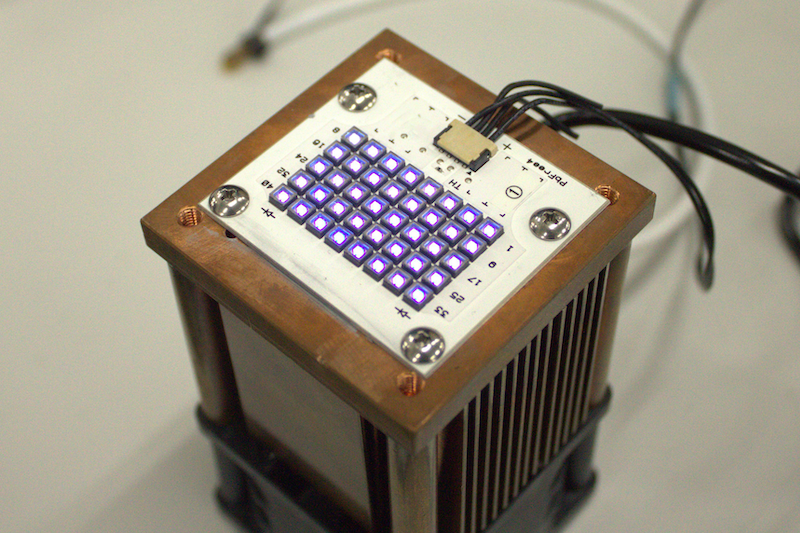
Thermal management remains a key challenge for UV-C LED systems. More than 90% of their input energy is converted into heat, which must be removed from the back of the semiconductor chip through dedicated heat sinks and cooling solutions. Conventional UV lamps are usually installed in quartz sleeves directly within the water stream. Their thermal load can therefore be transferred easily to the surrounding water. UV-C LED systems require a different thermal-management concept. Heat is predominantly generated at the rear of the semiconductor chip and must be removed through the LED package, circuit board and heat sink.
Current UV-C LEDs are particularly sensitive to operating temperature and thermal stress. Insufficient cooling accelerates output degradation and can shorten service life. This adds complexity, space requirements and energy use, particularly in high-power or continuous water-treatment applications. Supplier datasheets do not always reflect real-world operating conditions, where sustained use, ambient temperature and cooling design can significantly affect UV output and ageing. (source: RoHS public consultation contributions)
7: Validation
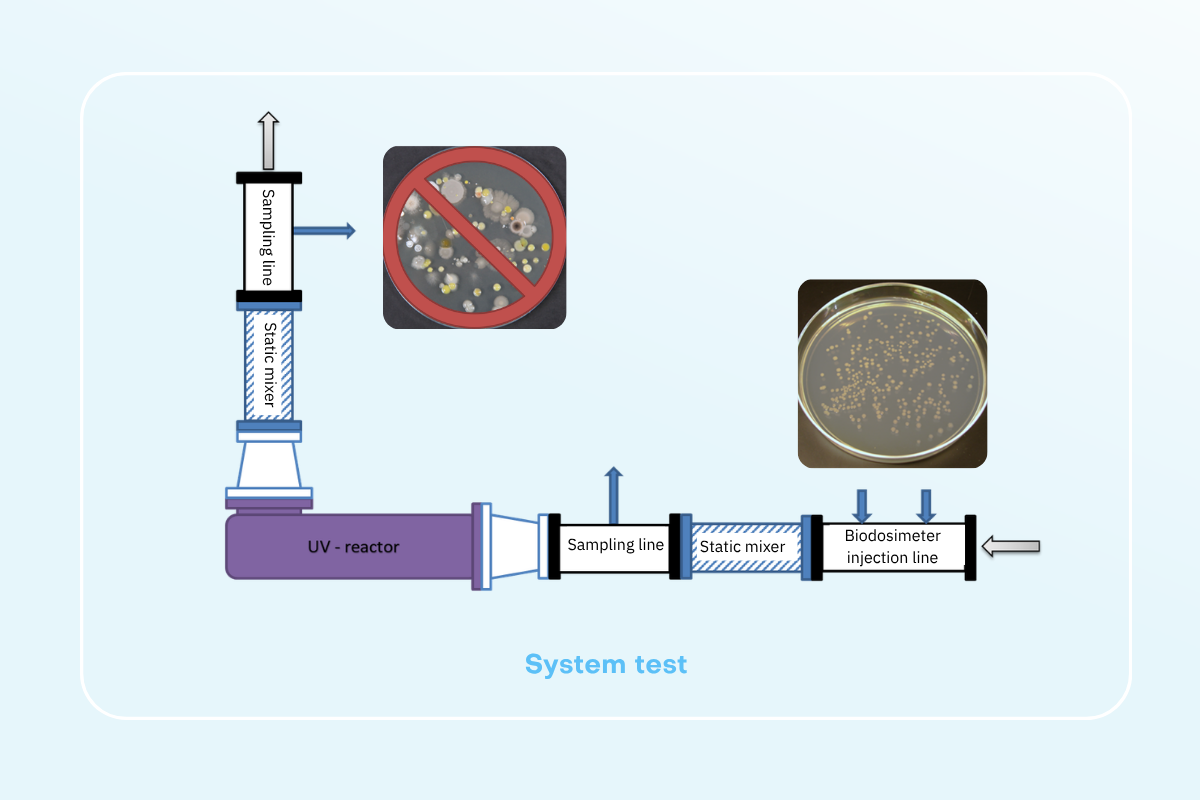
UV system validation is reactor-specific: the reactor, UV source, monitoring, hydraulics and control strategy must together prove delivery of the required UV dose. UV-C LEDs are not a drop-in replacement for lamps, as their directional emission, thermal behaviour and ageing affect dose distribution. Replacing a lamp-based system with LEDs therefore requires a full redesign and new biodosimetry-based validation—not simply a component change.
DIN 19294-5 is intended to establish performance requirements, validation procedures and comparability criteria for UV LED systems. This development is an important step, but it does not in itself mean that technically equivalent and widely validated LED solutions are already available for all water treatment applications. Manufacturers must develop, test and validate individual systems, followed by regulatory acceptance (by European standards) and operational experience. This is a multi-year process before widely proven, validated LED systems become available for larger continuous-flow applications.
Compare technologies at system and application level
When evaluating UV sources, it’s important to compare complete systems under equivalent operating condition and for the actual application in which it operates. UV-C LEDs can offer clear advantages in low-flow applications with intermittent operation. Because LEDs switch on and off instantly, electricity is consumed only while treatment is required. In applications such as point-of-use treatment or water dispensers, this can significantly reduce operating hours and total electricity consumption.
Low-pressure UV systems are generally more energy-efficient for applications requiring continuous disinfection. Modern systems can also regulate UV output according to operating conditions, reducing unnecessary energy consumption while maintaining the required validated dose.


Want to know more?
Do you want to collaborate on a sustainable water chain? Are you interested in how UV technology can contribute to achieving your sustainability goals? Contact us or meet us at events.